
Not Abandoned in the Dark
When the Sky Went Black
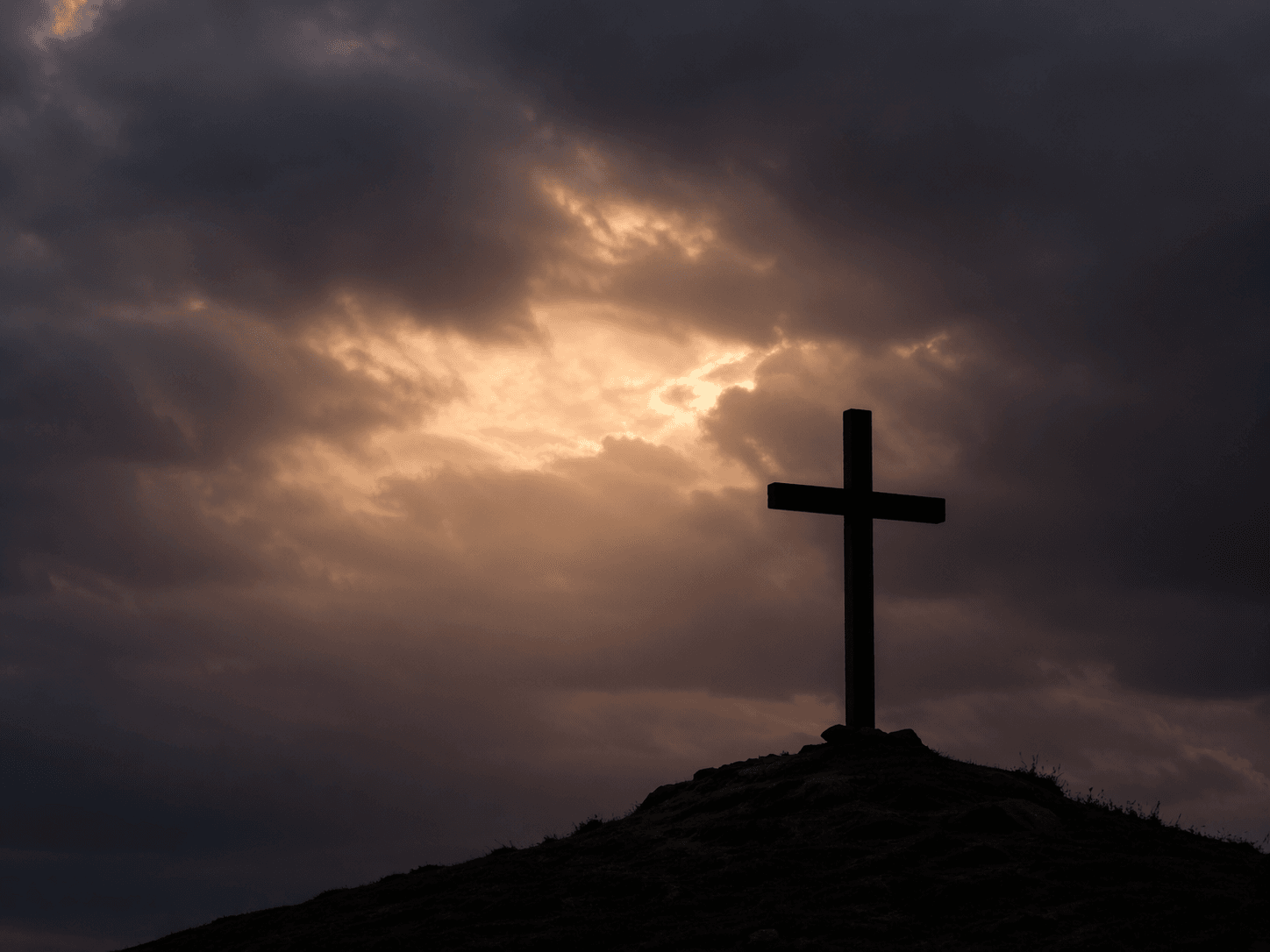
God was not absent in the darkness. He was closer than they could see.
Darkness has been part of my past.
For a long time, when I thought about darkness, I thought about sin. I thought about evil, shame, fear, and the places in my life where I had wandered too far from God. Darkness was something I wanted to leave behind. Something I wanted Jesus to pull me out of.
And He did.
I found the light of His love. I found mercy in Confession. I found His presence in the Eucharist. I found a peace I did not know I could have. So, when I looked back at the darkness in my life, I saw it as something behind me. Something Jesus had overcome.
But lately, while reflecting on Good Friday, I began to see darkness in a way I had not considered before.
I was thinking about the moment Jesus died on the cross. The sky had already gone dark. Matthew tells us, “From noon onward, darkness came over the whole land until three in the afternoon.” (Matthew 27:45)
Three hours.
At the brightest part of the day, the world went dark.
Then Jesus cried out again and gave up His spirit. Right after that, Matthew says, “And behold, the veil of the sanctuary was torn in two from top to bottom. The earth quaked, rocks were split.” (Matthew 27:51)
That moment did not pass quietly.
The Son of God died, and creation answered. The sky darkened. The veil tore. The earth shook. Rocks split open. Heaven and earth seemed to react to what had just happened on that hill.
At first, my mind went where it usually goes. I thought about sin. I thought about all the darkness Jesus carried for us. Every sin. Every wound. Every betrayal. Every hidden thing. All of it placed on Him. All of it shouldered by the only One who could carry it.
I thought about Jesus entering death. I thought about Him descending to the dead. I thought about how much darkness surrounded that moment.
But then another thought came.
This was not evil winning.
This was not like some hole ripped open and darkness poured out like that scene from Ghostbusters. This was not demons running wild because Jesus had lost. Evil did not prevail at the Cross.
It looked like defeat, but it was not defeat.
This was the beginning of victory. This was the birth of the Church from the pierced side of Christ. This was the path that would lead to the Resurrection. This was the road to Pentecost. This was not doom and gloom having the final word.
So, I started wondering.
If the darkness at Calvary was not only evil, what was it?
I started thinking about other places in Scripture where darkness is not tied to sin, but to the presence of God.
In Exodus, when the people saw thunder, lightning, smoke, and heard the blast of the shofar, they were afraid. They kept their distance. But Moses went forward. Scripture says, “So the people remained at a distance, while Moses approached the dark cloud where God was.” (Exodus 20:21)
The dark cloud where God was.
Not where God was absent. Not where God had left. Where God was.
Then I thought about Solomon and the Temple. When the Temple was dedicated, Solomon said, “The LORD intends to dwell in the dark cloud.” (1 Kings 8:12)
Again, darkness does not mean God is gone. It can also mean God is hidden, mysterious, and near in a way people cannot control.
The Holy of Holies was not a bright open room with windows and sunlight pouring in. It was hidden behind the veil. It was the most sacred place, the place of God’s presence among His people. And at the moment Jesus died, that veil was torn from top to bottom.
That changes how I see the darkness at Calvary.
Maybe it was not God leaving the room.
Maybe it was the hidden presence of God filling the moment in a way no human eyes could understand.
I want to be careful here. Not all darkness is holy. Some darkness really is sin. Some darkness really is evil. Some darkness really does come from fear, lies, despair, and separation from God.
But maybe not every darkness means abandonment.
Maybe sometimes darkness is what we experience when God is closer than our senses can bear.
It makes me think of walking into my son’s room at night to check on him while he is asleep. The room is dark, but I am not gone. I am right there. He may not see me. He may not know I am standing near him. But I am watching over him with love.
Maybe that is a small way to understand this.
There are moments when we cannot see God. We cannot feel Him. We cannot make sense of what He is doing. The room goes dark, and we assume that means we are alone.
But what if He is closer than we think?
That brings me back to one of the last things Jesus says from the Cross.
“My God, my God, why have you abandoned me?” (Matthew 27:46)
Those words sound like the cry of someone completely alone. And in His humanity, under the full weight of suffering, Jesus entered the depth of that cry. He entered fully into our suffering. He held nothing back.
But He was also praying the beginning of Psalm 22.
That Psalm starts with the same cry: “My God, my God, why have you abandoned me?” (Psalm 22:2)
But the Psalm does not stay there.
It moves toward trust. It speaks of God hearing the afflicted. It speaks of worship. It speaks of future generations proclaiming what God has done.
The Psalm begins in pain, but it ends in praise.
So maybe Jesus, beaten, breathless, and dying, only speaks the beginning. Maybe He gives us the first line because He knows the whole Psalm. Maybe He is not only crying out in suffering but pointing us toward the promise hidden inside it.
The story does not end with the cry.
It ends with glory.
Good Friday was horrible. Jesus suffered. Mary watched. The disciples scattered. The sky went black. The earth shook.
But the Father did not stop loving the Son. The Trinity was not broken. The Father, Son, and Holy Spirit remained one, even as Jesus entered the deepest suffering for our salvation.
And that matters for us. Because there are times when life gets dark, and the first thing we think is, God must have left.
The diagnosis comes. The friendship breaks. The prayer feels unanswered. Grief takes over the room. Old shame starts whispering again. Silence lasts longer than we expected.
And in that darkness, we start to wonder if we have been abandoned.
Good Friday tells us to be careful with that conclusion.
Darkness may feel like absence, but feeling abandoned is not the same as being abandoned.
Sometimes God is near in a way we cannot yet feel. Sometimes He is holding us while we are too wounded to notice. Sometimes He is hidden behind the veil of suffering, closer than our fear will let us believe.
That does not make pain good. It does not mean we pretend suffering does not hurt.
It means we do not face it alone.
The darkness I once knew was real. The sin was real. The shame was real. The pain was real. But Jesus was more real. His mercy was more real. His light reached places I thought were beyond saving.
Now I wonder if some of the darkness I feared was also where He came looking for me.
Not to leave me there.
To bring me through.
So, if you are in a dark place right now, do not assume God has walked away. Bring Him your fear. Bring Him your questions. Bring Him the line Jesus prayed from the Cross.
My God, my God, why have you abandoned me?
Then stay with the Psalm a little longer.
Let it carry you past the first cry. Let it lead you toward trust. Let it remind you that the Father was not far from the suffering Son, and He is not far from you.
The sky went dark on Good Friday.
But God was not gone.
He was nearer than they knew.
