
When The Days Grow Darker
Learning to Let Jesus Increase as a New Year Begins
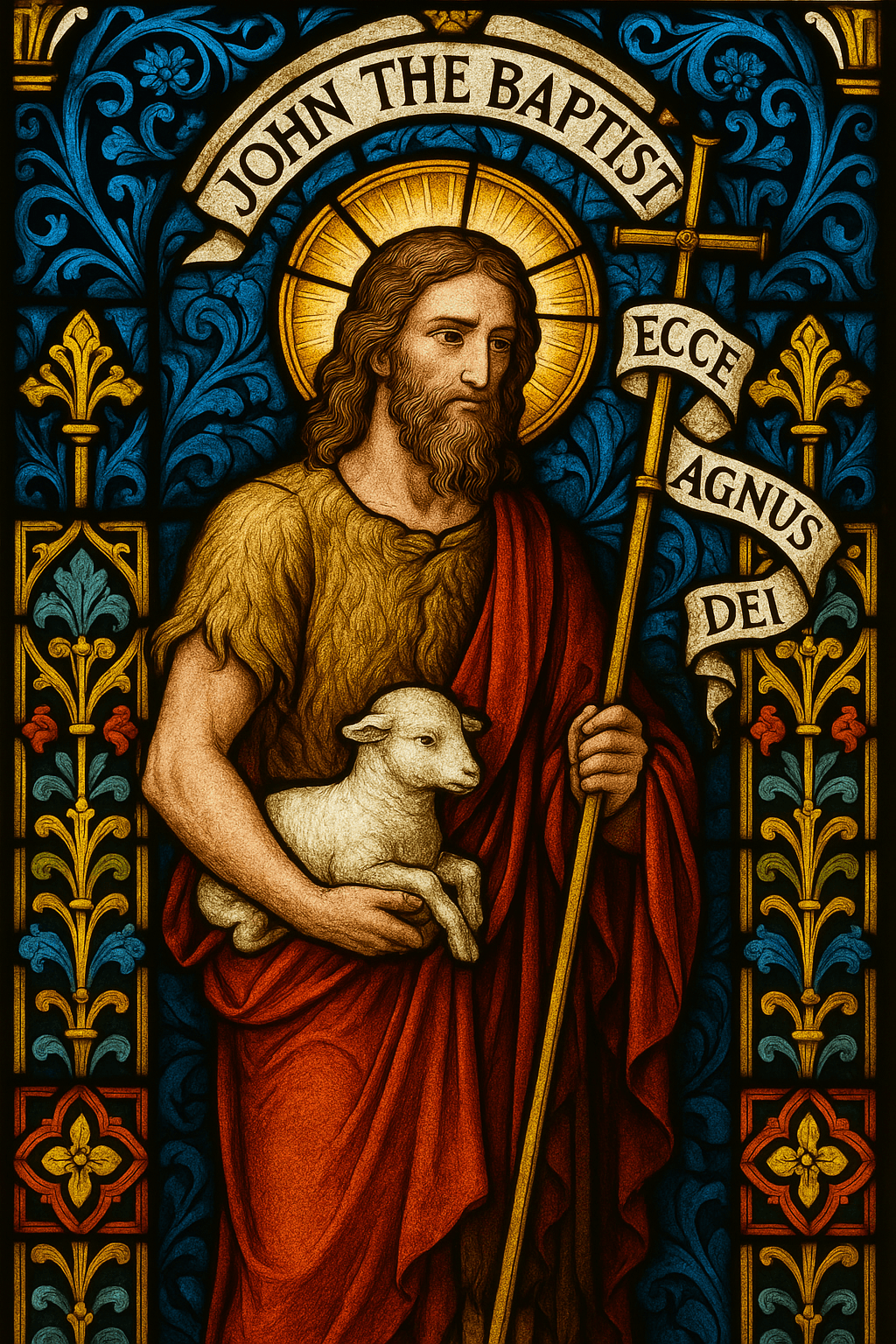
Let His presence rise, and let my pride fall.
By the time I drive home from work now, the sun sets before I even leave the building. I step out into a parking lot washed in headlights instead of daylight. The ride home feels longer because darkness presses in on the windows, and the whole day seems to close earlier than my heart expects.
This shift always hits during the last week of the Church year. We reach the Solemnity of Christ the King, and Advent waits right on the other side like a quiet doorway. The world moves toward winter. The sun steps back. Inside the Church, a new year of grace stands ready to begin.
A couple of years ago, someone shared a thought which stayed with me. They spoke about how the feast of the Birth of John the Baptist falls near the summer solstice, around June 24. Then the Nativity of the Lord arrives near the winter solstice, December 25. From John’s day in June, daylight slowly shrinks. From Christ’s birth at Christmas, daylight slowly grows. This simple pattern felt like a lesson written in the sky.
Scripture already links John and Jesus in a close and beautiful way. In Luke’s Gospel, the angel tells Mary, “And behold, Elizabeth, your relative, has also conceived a son in her old age” (Luke 1:36). John’s life and mission run about six months ahead of Jesus. John prepares the way on every level, even in the rhythm of time.
John’s Gospel describes John the Baptist with great clarity. “A man named John was sent from God. He came for testimony, to testify to the light” (John 1:6–7). John does not shine as the light. He points toward the light. Later he speaks one of the most honest lines in Scripture. “He must increase; I must decrease” (John 3:30). This last line holds an entire path of discipleship.
Think again about these two feasts. On June 24, near the longest day of the year in our region, the Church celebrates the birth of John. After this point, daylight shortens step by step. On December 25, near the shortest day, we kneel at the manger. From this point, daylight begins to lengthen. John’s life stretches across the height of the light, then slowly steps aside. Jesus rises in the quiet low place and draws the light after Him.
I love how this pattern rests inside our northern seasons. Christians in other parts of the world experience these feasts in different ways, and the Church never built faith on movements of the sun. Still, I see a quiet kindness in this. Creation echoes the story which unfolds in Scripture. The sky over our streets preaches the same line John spoke by the Jordan. “He must increase; I must decrease.”
Right now, we stand in a kind of holy doorway. We walked through another year of readings and feasts. We listened again to parables, healings, and hard sayings. We watched the Passion during Holy Week. We rejoiced at Easter. We received the Spirit at Pentecost. We lived through long stretches of Ordinary Time which did not feel special, yet grace still moved in hidden ways. Now the Church year has leaned on its final Sunday. Next week, Advent begins. A new year starts while the world still thinks about the end of one.
I look back over my own year and see places where my light tried to run the show. Times when I pushed my plans, my comfort, my image. Times when my words filled the space before listening did. In those moments, I wanted MY influence to increase. I resisted the part where I decrease. Humility sounded fine as an idea, but felt far less welcome when it reached into my schedule or touched my pride.
Then there were other days which felt more like winter. Prayer felt flat. Efforts in ministry seemed small. Old temptations stepped back into view. The days felt short in more ways than sunlight. During some of those weeks, I prayed the Rosary on morning drives and wondered if anything inside me was changing. Looking back now, I see those seasons as “solstice” moments. A hidden turning point. On the surface, not much light. Deep down, Christ already at work.
One simple picture helps me. Think of a room with two light switches. One switch controls a small lamp in the corner which shines on you. The other switch controls the main light in the middle of the room. When the lamp in the corner burns bright and the main light stays low, the whole room feels centered on you. When the lamp fades and the main light rises, nothing in the room moves, yet everything feels different. This is what John describes. Less of my light, more of His.
Advent carries this same movement into daily life. We start with a wreath and a single candle. Then another. Then another. Nights stay long outside the window, but the flame on the table grows week by week. The readings bring John the Baptist forward again. He cries out in the desert. He calls for repentance. He points away from himself toward the Lamb of God. In a few short weeks, we stand before a manger and hear, “The people who walked in darkness have seen a great light” (Isaiah 9:1).
What does all of this mean during this last week of the Church year? I believe the Lord invites us to stand with John for a moment. To listen again to this simple line. “He must increase; I must decrease.” Not as a threat. Not as a harsh demand. More like a promise of freedom. When my grip on control decreases, Christ’s peace rises. When my grudges shrink, His mercy shines through. When my fear steps back, His courage steps forward.
As this year draws to a close, try a small examen with one question. Where did my light fight for center stage this year? Where did I push my way, my comfort, my plan? Then ask another question. Where did Christ gently increase, even when my eyes missed the change in the moment? Perhaps in a habit of prayer which held steady. Perhaps in a new tenderness toward someone who caused pain. Perhaps in a quiet trust which stayed firm during a hard season.
Bring all of this into Advent as a resolution for the new liturgical year. Most people speak about resolutions in January when the calendar changes. The Church offers a different starting line. A new year of grace begins with Advent. So, ask the Lord for one clear resolution for this Church year. One place where you will decrease, and one place where you will let His light increase.
You might resolve to let pride or resentment decrease. This might look like forgiveness for an old hurt, or a decision to stop speaking about someone in a harsh way. You might choose to let distraction decrease by setting aside one regular time each day where screens stay off and silence has room to breathe. These steps remain small on the outside, yet they open wide space inside.
At the same time, choose one practice which allows Christ’s light to increase. You might resolve to attend daily Mass once or twice a week. You might begin a daily Rosary, even if it starts in the car on the way to work. You might commit to a weekly Holy Hour, to one extra hour in front of the Blessed Sacrament. You might decide on a steady act of service, perhaps a monthly visit with someone lonely or a regular work of mercy in your parish. Let this serve as your “new year’s resolution” for the Church’s new year.
When you walk out into the early night this week, lift your eyes for a moment. The days feel short. The wind grows cold. Yet by the time we reach Christmas, the sun will linger a little longer. The Church already knows this pattern. She places the birth of John near the height of the light, then lets his days shrink. She places the birth of Jesus near the low point, then lets His light stretch across the sky and across the year.
My prayer as I close this liturgical year is simple: Lord Jesus, true Light of the world, rise in the dark corners of my heart. Help me step aside in every place where I stand in Your way. Increase Your presence in me. Decrease my pride, my fear, and my stubborn grip on control. Lead me into this new year of grace with eyes fixed on You.
If shorter days feel heavy for you right now, hold this prayer close. Ask where the Lord desires to increase in your life this Advent. Ask where He invites you to decrease, not for shame, but for freedom. The calendar shifts. The seasons turn. Through every change, Christ keeps rising.
