
Leaning Toward the Altar
A Father’s Answer to his Son at Mass
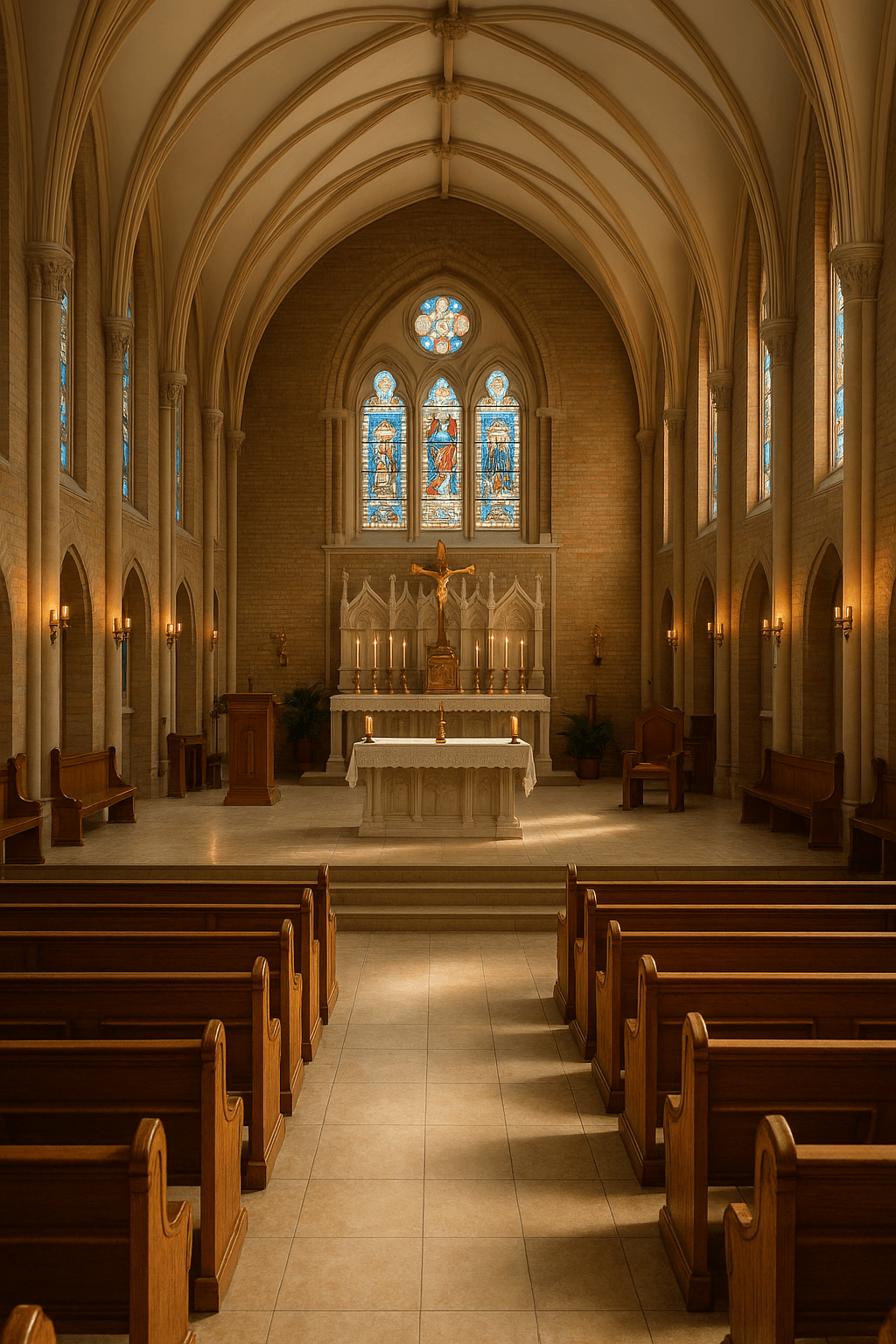
Leaning toward the altar where Christ draws every heart closer.
One Sunday not long ago, my son and I stood side by side as the entrance hymn began. The cross, servers, and priest started down the aisle. As they drew near, I bowed toward the altar, like I always do. My son leaned close and whispered, “Dad, why do you do that?”
I smiled and whispered back, “I will tell you later.”
Then Mass moved on. We knelt, stood, sang, listened, received but later never came. By the time we reached the parking lot, the question had faded under talk about brunch and other Sunday plans. I missed my chance to answer him.
So, son, this blog is for you. I hope it helps you see why your dad bows when he does, and how those small movements tie into the faith we share. I also hope it helps anyone who has noticed little gestures at Mass and wondered what sits behind them.
I do not bow because I want anyone to notice. I bow because my body still has a job in worship. Saint Paul writes about every knee bending at the name of Jesus and every tongue proclaiming him as Lord. My heart holds on to that vision. My body does its imperfect best to follow. These are not the only times we bow at Mass, but they are a few moments that stand out for me and that I want to share here.
The first bow: The Entrance Procession
Let us go back to that moment my son noticed. The entrance hymn starts. We stand. The cross leads the way, followed by servers, deacon, and priest. As they pass our pew, I bow.
My bow goes toward the altar, not toward the priest as a man. The altar stands at the center of the sacrifice. There the priest stands in persona Christi and speaks the words of Jesus over bread and wine. There, by the work of the Holy Spirit, bread and wine become His Body and Blood for us.
The Church teaches special reverence for the altar, because it both represents Christ and holds the holy sacrifice. So as the procession passes, my body leans forward for a moment toward that holy place. It is my silent way of saying, “Lord, I see what will happen here. I love you. I honor you.”
The second bow: The Lector Bow before and after the readings
On some Sundays, my son watches me leave our pew and walk toward the ambo to proclaim the readings. Before I step up, I stop near the altar and bow. After I finish and step away, I bow again.
This gesture does not come from my own ideas. The Church asks lectors to bow to the altar before and after proclaiming the word. The bow reminds us that the word we hear flows from the same love poured out in the sacrifice at the altar.
For me, that bow also steadies my heart. I want people to hear Christ, not my voice. So before I open my mouth, I bend low for a moment. I remember where I stand. I remember who speaks first. Then I proclaim. When I finish, one more bow returns the focus to the altar and the One who speaks through His word.
The third bow: The Creed and the Mystery of the Incarnation
Another bow arrives each Sunday when we pray the Creed. My son knows every line by heart. We speak together: “I believe in one God…” The whole church moves as one voice.
Then we reach the line about the Holy Spirit, the Virgin Mary, and the Son taking on human flesh. At those words, we bow. On Christmas and the Annunciation, we go even lower and kneel.
This bow honors a mystery beyond full understanding. The eternal Son stepped into time. The Word took on skin and bone, breath and heartbeat. God drew so near that he received a mother’s arms and embraced our human story from the inside.
I bow there because my mind and tongue fall short. My body bends in awe. That small movement helps my heart stay awake to the wonder of Christ born among us.
The fourth bow: EMHC Bows with and without the Eucharist
At some Masses, my son serves near the altar while I help as an Extraordinary Minister of Holy Communion (EMHC). From his place by the credence table or near the priest, he sees another pattern in my movements.
When I cross in front of the altar with empty hands, I stop and bow, like other ministers. That bow says again, “Lord, this place belongs to you. This sacrifice belongs to you.”
Later, once I hold a paten or chalice with the Eucharist, the pattern changes. My steps grow slower. My arms stay steady. I do not add another bow when I move across the sanctuary, because my first duty in that moment centers on the Lord in my hands. The Church guides ministers who carry sacred things to move in a simple, steady way. Reverence shifts from extra motions to careful attention.
For me, that shift speaks loudly. The One I adore now rests in my hands. Every step serves him. Every movement protects him. My whole focus rests on bringing him safely to each person who steps forward in faith.
The fifth bow: Before Receiving Communion
One last bow comes before my own Communion. As I step up in line and approach the minister with the Host, while the person in front of me is receiving, I bow once more. The bishops in our country ask for some gesture of reverence before receiving. This simple bow offers my “yes” with my whole body.
In that moment, I often pray in my heart and echo the centurion’s words, “Lord, I am not worthy.” The bow and the words rise together. My head lowers, my heart leans forward, and then I receive the One who takes away my sins.
A simple picture helps me live all of this. When someone you love walks through your front door, you do not stay frozen. You stand up, move toward them, open your arms, or at least lift your eyes from the screen. Small gestures say, “You matter to me,” long before any speech. These bows at Mass work the same way for me. My body speaks love before my mind finishes forming the words.
To my son, I want to say this directly. I am sorry I did not answer your question in that moment. During Mass, our minds belong on the altar and on what the Lord is doing before us, so I try not to start long side conversations in the pew. Still, you deserved more than, “I will tell you later,” with nothing after. So here is the answer I owed you. Your dad bows when he does because Jesus stands before us in the Mass, at the altar, in the word, and in the Eucharist. My heart still longs to lean toward him. Those small movements help my whole self lean toward the One I love.
To anyone reading, you do not need to copy every gesture I make. The Church already gives clear postures for Mass. Within that, each heart offers personal love. I simply wanted to share how these bows grew in my life and how they keep drawing my attention back to Christ.
So, I invite you to reflect on one question as next Sunday approaches. What do you do a little extra to show your devotion to the Lord during Mass? Bring that question to prayer. Ask Jesus to guide one small gesture of love, in harmony with the Church, that helps your body and soul lean toward him.
