
Here I Am, Lord
Learning to Listen When God Comes First
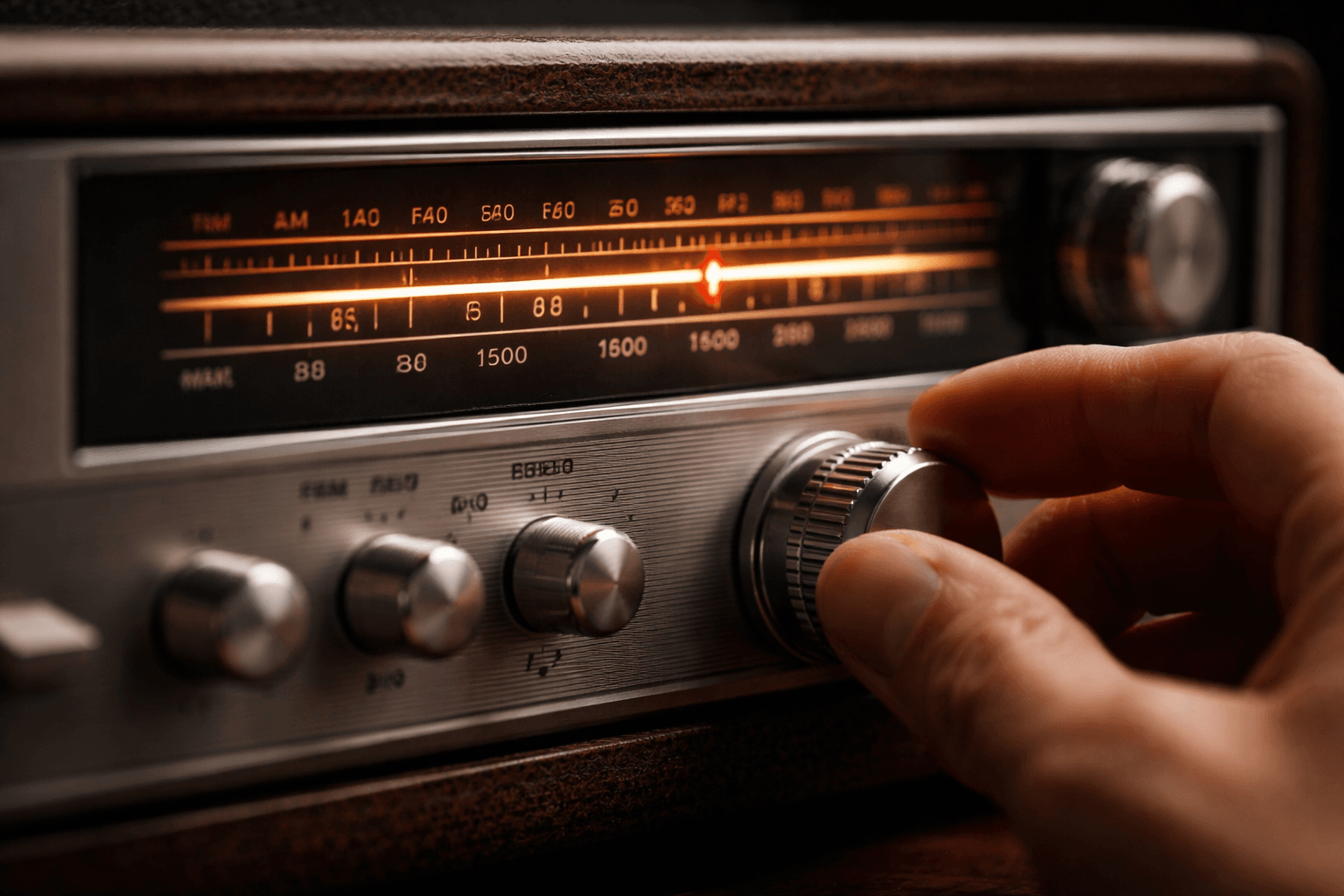
Listening begins when the heart turns toward the right frequency.
Last Sunday, during the Communion procession, something unexpected happened. The sound system failed, and the choir director was unable to announce the hymn. No song number was given. No page was named. For a brief moment, there was only silence. Then the organ began to play, and within the first few notes, I knew exactly what we were about to sing.
Here I Am, Lord.
I did not need a hymnal. I did not need the words in front of me. Those lines have lived in me for years. They feel engraved in my mind and, in a deeper way, engraved on my soul. I know every word by heart. The music carried me back before the choir even began to sing.
I was suddenly back in Catholic school, where I sang that hymn more times than I could count. It was familiar then, almost comforting. We sang it often, and it quickly became one of our favorites. At the time, I did not stop to weigh what those words meant. I sang because it was part of the Mass, part of formation, part of the rhythm of faith taking shape in me long before I understood how much those words would one day ask of my heart.
Years later, those same words sound different.
Here I am, Lord.
They no longer feel like something meant only for a song. They feel like a response. A decision. A posture of the heart that reaches far beyond the music.
That hymn rests firmly on Scripture. Dan Schutte did not invent the phrase. He gave voice to a pattern God has used from the beginning. In the Bible, when God calls, He does not force. He invites. And when a heart is ready to listen, the response is simple, honest, and exposed.
Here I am.
The first step always begins with presence.
Abraham shows us this clearly. When God calls his name, Abraham answers without hesitation. “Here I am,” he says, before he knows what will be asked of him (Genesis 22:1). He does not yet see the road ahead. He simply makes himself present before God. That presence opens the door to obedience, even when obedience will later stretch him beyond what he believed he could bear. Abraham’s story reminds me that God’s will often unfolds one step at a time, and the first step is availability.
The second step comes through listening.
The story of the young Samuel has always stayed close to my heart. God calls to him in the night, and Samuel runs to Eli, thinking the voice belongs to someone else. This happens again and again until Eli understands what is happening and gently guides him. When God calls once more, Samuel responds with words that still shape how we listen today. “Speak, for your servant is listening” (1 Samuel 3:10).
Samuel does not control the moment or define the message. He simply listens. God’s voice becomes clear when Samuel learns where to turn his attention. Listening follows presence, and listening prepares the heart for obedience.
The third step is surrender.
That pattern reaches its fullest expression in Jesus Himself. In the Garden, facing suffering He fully understands, Jesus prays words that still humble me every time I hear them. “Not my will but yours be done” (Luke 22:42). This is not resignation. It is trust. Jesus does not stop feeling fear or pain. He places those feelings inside obedience. He shows us that doing the Father’s will does not remove the cross, but it fills the cross with meaning.
That same surrender lives quietly in the prayer Jesus teaches us. When we pray the Our Father and say, “Thy will be done,” we are echoing His own obedience (Matthew 6:10). We are not reciting a line out of habit. We are training our hearts. We are learning, slowly and imperfectly, how to place God first again and again. Those words shape us over time, often in ways we only notice when we look back.
This is where the hymn begins to press inward for me.
Here I Am, Lord is not a song about enthusiasm or confidence. It is a song about listening. God speaks first. He sees suffering. He hears cries. He notices injustice. Then He calls. The response does not begin with a plan or an explanation. It begins with presence.
That is where discernment starts.
God gave us free will from the beginning. In the Garden, humanity was free to choose love or to turn away from it. That freedom did not disappear after the Fall. It remains at the center of every decision we make. We still choose what holds first place in our lives. We still decide which voice we listen to most closely.
When God is not first, other voices fill the space quickly. Noise grows. Distraction becomes normal. Sin rarely arrives loudly. More often it enters quietly, through small compromises and divided attention. Over time, the heart adjusts, and listening becomes harder, not because God has stopped speaking, but because we have tuned ourselves elsewhere.
When God is first, something different happens.
Prayer becomes less about filling silence and more about creating it. The heart slows down. Priorities begin to reorder themselves. God’s will does not suddenly become obvious in every detail, but His voice becomes recognizable. Jesus speaks of this when He says, “My sheep hear my voice; I know them, and they follow me” (John 10:27).
I have seen this difference in my own life. In times when prayer was steady and God clearly held first place, discernment felt calmer, even when circumstances were heavy. In other times, when prayer slipped to the margins, confusion grew, even when life looked fine from the outside. The change was never about God speaking louder. The change was always about where my attention rested.
That is why the First Commandment matters as much as it does. “You shall have no other gods before me” (Exodus 20:3). This is not a threat. It is protection. When God the Father stands first, everything else finds its proper place. When He does not, disorder follows, not as punishment, but as consequence.
Listening to God is not primarily about effort. It is about order. Presence. Listening. Surrender.
I think of it like tuning a radio. The signal is already there. When the dial moves closer to the right place, the static fades and the sound becomes clear. When the dial drifts, noise takes over. God’s voice does not disappear. Our attention shifts. The evil one thrives in static. He does not need to silence God. He only needs to distract the heart long enough for clarity to fade.
Putting God first tunes the heart.
That tuning happens daily. Sometimes it happens many times in the same day. Each choice either sharpens or dulls our spiritual hearing. Each prayer either opens space or fills it with something else.
This is where obedience begins to touch real life. For me, learning to listen this way had just begun. I was only starting to pray, only beginning to clear the static, still learning how to tune my heart toward God at all. Then the answer came in a way I did not expect. Someone else had already tuned her heart more fully. She came to me and said that the Lord had spoken clearly to her, and that she was sent to ask whether I had ever considered holy orders as my path. It felt as though we had been listening to the same station, but I was still turning the dial while her signal had already come through. What I had not yet learned how to hear was spoken out loud through someone who had been listening with clarity and trust. It was not the answer I was expecting, but it was unmistakably the answer I needed.
Jesus models this throughout His life. He steps away to pray. He listens before acting. He refuses to let urgency replace obedience. Even when crowds press in and expectations rise, He remains anchored in the Father’s will. His life shows us that obedience flows from intimacy, not pressure. “I do not seek my own will but the will of the one who sent me” (John 5:30).
That same invitation reaches us quietly and persistently.
God does not ask us to have everything figured out. He asks us to be present. To place Him first. To listen. To respond when He calls, even when the answer feels costly.
When God stands first, His will becomes clearer, not always easier, but clearer. The heart grows quieter. Other voices lose authority. The path unfolds one faithful step at a time.
Here I Am, Lord no longer sounds like a simple hymn to me. It sounds like a daily question.
Is that still my answer?
This week, I invite you to sit with those words for a moment, not as a song, but as a prayer. Ask yourself where God stands in your daily life. Notice what fills your silence. Pay attention to what changes when prayer returns to the center.
You do not need to rush. You do not need a full plan. Begin with presence. Begin with honesty. Begin by offering God a quiet, sincere Here I am.
He knows how to guide a heart that listens.
